
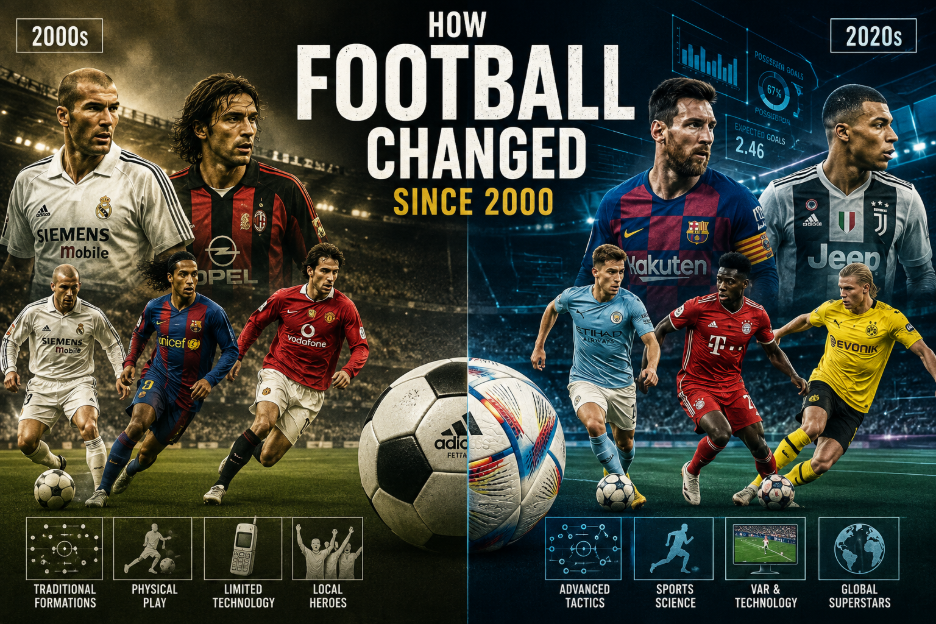
Football has transformed dramatically since the early 2000s. The game is now faster, smarter, more tactical, and more global than ever before. From technology to tactics, nearly every part of football has evolved over the last two decades.
1. The Speed of the Game Increased
In the early 2000s, football was more physical and slower in transition. Today’s teams play with intense pressing, rapid passing, and quick counterattacks.
Modern players are expected to:
- Sprint constantly
- Press aggressively
- Defend and attack equally
- Maintain high fitness levels
Managers like Pep Guardiola and Jürgen Klopp helped shape this high-intensity era.
2. Tactics Became More Advanced
Football tactics have become far more detailed and analytical.
Early 2000s
- Traditional formations like 4-4-2
- Physical midfield battles
- More direct football
Modern Era
- Possession-based systems
- High pressing
- Inverted full-backs
- False 9 roles
- Data-driven positioning
Teams now spend huge amounts of time analyzing opponents and studying statistics.
3. Technology Changed Football Forever
Technology has had a massive impact on football.
Major Innovations
- Goal-line technology
- VAR (Video Assistant Referee)
- Performance tracking systems
- GPS fitness monitoring
- AI-driven analytics
VAR remains one of football’s most debated changes because it affects key decisions during matches.
4. Players Became Global Brands
In the 2000s, footballers were famous athletes. Today, many are worldwide celebrities with massive online audiences.
Players like:
- Cristiano Ronaldo
- Lionel Messi
- Kylian Mbappé
have become global brands through:
- Social media
- Sponsorships
- Fashion partnerships
- Streaming and online content
Football culture now extends far beyond the pitch.
5. Transfer Fees Exploded
Transfer prices in football have risen dramatically.
Early 2000s
A €30 million transfer was considered huge.
Today
Transfers regularly exceed €100 million.
The market changed because of:
- Wealthy club owners
- TV broadcasting deals
- Global sponsorships
- Commercial revenue
Modern football is now a multi-billion-dollar industry.
6. The Rise of Data and Analytics
Clubs now rely heavily on data analysis for:
- Recruitment
- Tactical planning
- Injury prevention
- Match preparation
Scouts no longer focus only on highlights. Clubs study:
- Passing accuracy
- Press resistance
- Defensive positioning
- Running distance
- Expected goals (xG)
Football has become more scientific than ever before.
7. Social Media Changed Fan Culture
Fans once relied mostly on television and newspapers. Today, football is available 24/7 through:
- YouTube
- TikTok
- Podcasts
- Fan channels
This has created:
- Faster football news cycles
- More online debates
- Greater player exposure
- Stronger global fan communities
Football is now constantly active online.
8. Young Players Break Through Earlier
Modern football clubs trust young talent much earlier than before.
Teenagers now regularly play at the highest level, including stars like:
- Lamine Yamal
- Jude Bellingham
- Endrick
Better academies, sports science, and coaching have accelerated player development.
9. Women’s Football Grew Rapidly
One of football’s biggest transformations has been the rise of women’s football.
Competitions like:
- FIFA Women’s World Cup
- Women’s Super League
have seen huge growth in popularity, attendance, and investment.
Women’s football now attracts millions of fans worldwide.
Conclusion
Football since 2000 has evolved into a faster, more tactical, technology-driven global sport. While the game still delivers the same passion and excitement, the way football is played, watched, and analyzed has completely changed.
Yet one thing remains timeless: football’s ability to unite people across the world through unforgettable moments and shared emotion.