
We often talk about formations, but modern football is quietly moving beyond them.
The shift isn’t just tactical—it’s philosophical.
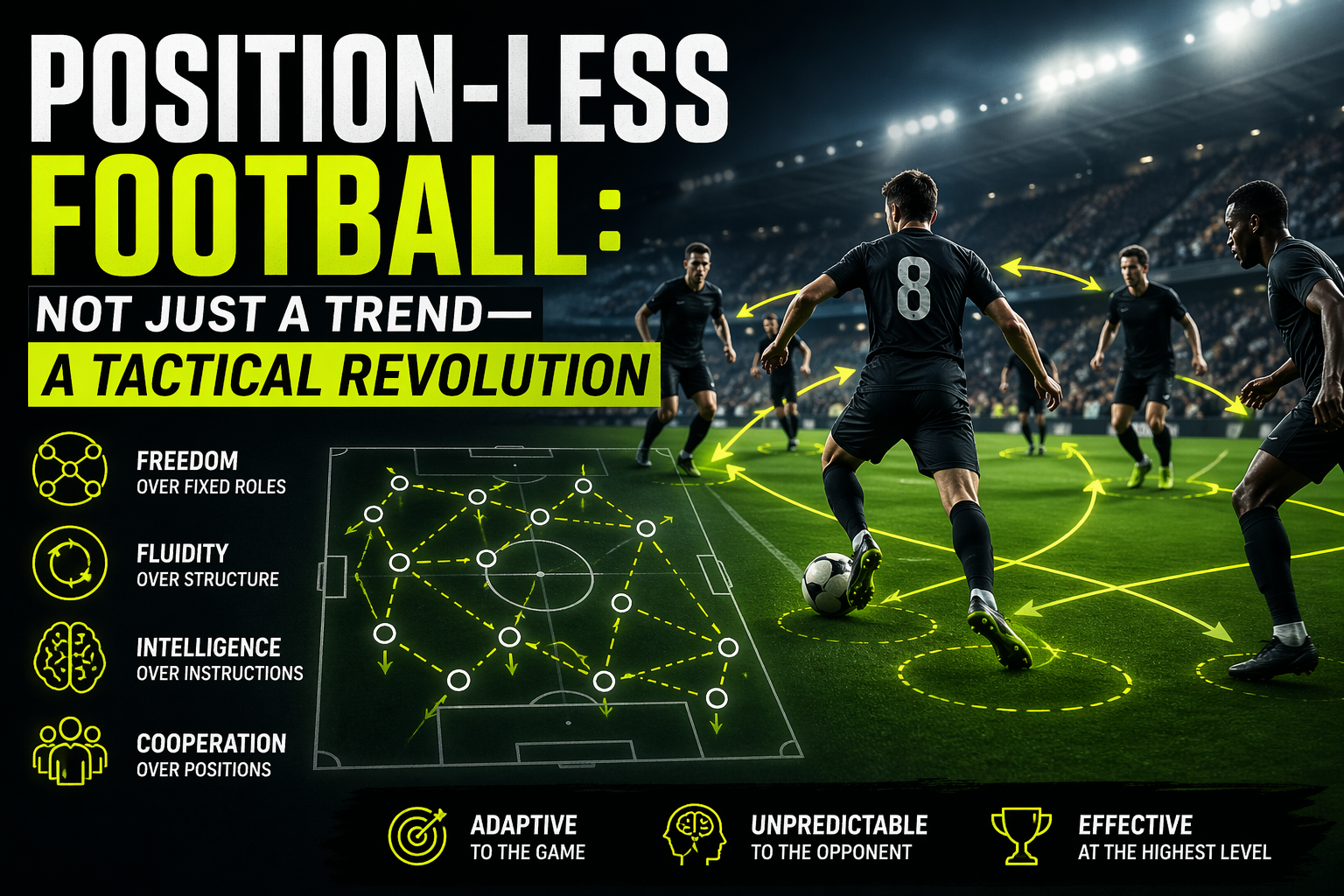
📌 From Structure to Space
In the past, a player’s identity was tied to a number:
9 = striker
10 = playmaker
6 = defensive midfielder
Today? Those definitions are blurring.
Players are now judged by:
• How they manipulate space
• How they adapt in transitions
• How they contribute across phases
🔍 What Replaced the Traditional Number 9?
Not one role—but many.
Instead of a single focal point, attacks are now built on:
• Rotating front lines
• Inside-cutting wingers
• Late midfield runs
• Overlapping full-backs
The responsibility to score is shared—not centralized.
🧩 Why This Makes Teams More Dangerous
When no player is fixed:
• Defenders lose clear marking references
• Passing lanes multiply
• Space constantly shifts
It becomes less about “stopping a player” and more about “containing a system.”
⚡ But There’s a Catch
Fluid systems demand:
• High football IQ
• Perfect timing
• Relentless work rate
Without these, fluidity collapses into chaos.
📈 Modern Football is About Decision-Making Speed
The best teams don’t just move more—they think faster.
Every second involves micro-decisions:
Where to move
When to press
Who to overload
That’s where games are won.
🌍 Where the Game is Headed
We’re entering an era where:
• Data shapes positioning
• AI influences tactical preparation
• Players are trained for versatility from youth level
The next generation won’t “learn positions”—they’ll learn systems.
💭 Closing Insight
The Number 9 isn’t dead—it has evolved.
Today’s striker doesn’t just finish chances…
They create them, initiate pressure, and redefine space.
And in this new era, the question is no longer:
“Where do you play?”
It’s:
“What can you do—everywhere?”