
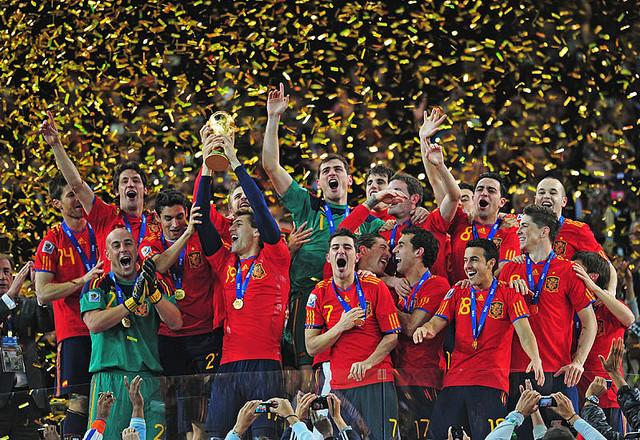
How Spain Won FIFA World Cup 2026 is a story of tactical brilliance, disciplined defending and intelligent coaching. Spain defeated Argentina 1-0 after extra time in the FIFA World Cup 2026 final to lift their second World Cup title. Luis de la Fuente’s side controlled possession, pressed aggressively, limited Lionel Messi’s influence and produced one of the greatest team performances in World Cup history.
The final result was narrow, but Spain’s victory was not accidental. They controlled possession, restricted Lionel Messi’s influence, pressed Argentina into mistakes and used their substitutes intelligently. Spain finished the tournament having conceded only one goal in eight matches, establishing a new defensive record for a World Cup-winning team.Spain won FIFA World Cup 2026
Their title was built on collective football rather than dependence on one star.
FIFA World Cup 2026 Final Result
| Match | Result |
| Spain vs Argentina | Spain won 1-0 after extra time |
| Goalscorer | Ferran Torres, 106th minute |
| Venue | New York New Jersey Stadium |
| Achievement | Spain’s second FIFA World Cup title |
Spain previously lifted the trophy in 2010. Their 2026 victory also completed the first 48-team and 104-match edition of the FIFA World Cup.
Spain Controlled the Ball Without Becoming Passive
Possession has always been central to Spanish football, but this team used it with greater purpose.
Spain did not simply pass the ball to protect themselves. Their midfielders constantly changed the angle of attack, moved Argentina’s defensive shape and waited for openings between the lines.
Rodri remained at the base of midfield, offering a safe passing option and protecting against counter-attacks. Fabián Ruiz moved into wider and more advanced positions, while Dani Olmo searched for space behind Argentina’s midfield.
Spain finished the final with approximately 65 per cent possession and completed far more passes than Argentina. They also registered 12 shots on target, forcing Emiliano Martínez into a record 12 saves.
The important point was not possession for its own sake. Spain used possession to control where the match was played.
Argentina spent long periods defending near their own penalty area and rarely managed to establish sustained attacks.
The Counter-Press Stopped Argentina’s Transitions
Argentina’s best route to victory was through quick counter-attacks.
Messi, Julián Álvarez and Lautaro Martínez are most dangerous when they receive the ball before an opponent’s defence has recovered. Spain prevented that situation through an aggressive counter-press.
Whenever possession was lost, the nearest Spanish players immediately surrounded the ball. The first objective was to regain it. When that was not possible, they delayed Argentina long enough for the defensive shape to recover.Spain won FIFA World Cup 2026
This system placed Argentina’s midfield under constant pressure.
Enzo Fernández and Alexis Mac Allister struggled to receive the ball facing forward, while Messi was often forced to drop deeper in search of possession. Argentina did not register their first shot until the closing stages of extra time and finished with an expected-goals figure of only 0.22.
Spain’s defence began with their forwards and midfielders rather than their centre-backs.
How Spain Limited Lionel Messi
Stopping Messi required a collective plan.
Spain did not assign one defender to follow him across the pitch. Instead, they reduced the spaces in which he prefers to operate.
Rodri protected the central area in front of the defence. Spain’s centre-backs remained compact, while the full-backs narrowed their positions whenever Argentina attacked through the middle.
When Messi dropped into midfield, he often received the ball with a Spanish player behind him and another closing from the side. This prevented him from turning comfortably and forced him to play safer passes.
Argentina became increasingly dependent on Messi creating something from limited possession. As the match continued, he became more isolated from the forwards.
Spain respected Messi without allowing their entire structure to revolve around him.
Width Created Space in the Middle
Spain’s wingers played a crucial tactical role.
Lamine Yamal and the players operating from the opposite wing stayed wide during the build-up. Their positioning forced Argentina’s full-backs to defend close to the touchline, increasing the distance between defenders.
That created space for Spain’s midfielders and forwards to move into central areas.
Yamal’s presence was particularly important. Even when he did not receive the ball, Argentina had to account for his ability to beat defenders in one-on-one situations.
Spain frequently switched the ball from one side to the other, making Argentina’s block move across the pitch. Those movements gradually consumed energy and created small gaps.
The winning goal eventually came from Spain’s left side, where substitute Nico Williams created the opportunity for Ferran Torres.
Luis de la Fuente’s Substitutions Won the Final
Spain’s depth became decisive in extra time.
De la Fuente introduced Nico Williams and Ferran Torres, giving his team fresh pace against a tired Argentine defence. The two substitutes combined for the winning goal in the 106th minute.
Williams attacked space from the left and delivered the decisive ball into the penalty area. Torres reacted quickly and finished the move to give Spain the lead.
The goal represented Spain’s tournament perfectly.
It did not come from an individual trying to win the match alone. It came from movement, width, patience and two substitutes understanding their roles.
Spain’s bench was not merely a collection of replacements. It allowed De la Fuente to change the rhythm of matches without changing the team’s identity.
Spain’s Defensive Record Was Historic
Spain conceded only one goal in eight World Cup matches.
That record was built on organisation rather than defensive caution. Spain defended high up the pitch, controlled possession and limited opponents to low-quality opportunities.
Pau Cubarsí and his central defensive partners remained calm when defending large spaces. The full-backs supported attacks but recovered quickly, while Rodri protected the area in front of the defence.
Goalkeeper Unai Simón was reliable whenever called upon, but Spain’s structure meant he was rarely exposed to repeated pressure.
Their clean sheet against Argentina was particularly impressive. The defending champions had scored 19 goals before the final, yet they were almost completely denied during 120 minutes.
Spain proved that possession football and defensive discipline can strengthen each other.
A Team Without Dependence on One Superstar
Argentina were built around Messi’s ability to create decisive moments. Spain were built around a system.
Rodri controlled midfield. Yamal stretched the defence. Fabián Ruiz supported possession. Cubarsí played through pressure. Oyarzabal moved intelligently, and Williams and Torres changed the final from the bench.
Spain received goals and important contributions from several players throughout the tournament. Reuters described their success as a victory for collective strength over individual dependence.
This made Spain difficult to stop.
Preventing one player from influencing the match did not remove their main threat. Another player could take responsibility without disrupting the team’s structure.
Spain’s Tactical Flexibility
Spain remained committed to possession throughout the tournament, but they were not rigid.
They could attack quickly through the wings, slow the match through midfield, press high or defend in a compact block when required.
Their semifinal victory over France showed this flexibility. Spain denied Kylian Mbappé space, controlled midfield and won 2-0 without allowing France to establish a serious comeback.
Against Argentina, Spain faced a more physical and disruptive opponent. They remained patient rather than becoming frustrated.
Even when the final became tense, Spain trusted their structure.
That trust was one of the clearest differences between the teams.
Rodri’s Role in Spain’s Success
Rodri was the foundation of Spain’s title-winning campaign and was later recognised as the tournament’s most valuable player.
His influence extended beyond passing statistics.
He positioned himself behind Spain’s attacks, recovered loose balls and stopped counter-attacks before they became dangerous. He also gave the centre-backs a reliable passing option whenever Argentina attempted to press.
Rodri understood when to accelerate the game and when to slow it down.
That control allowed Spain’s attacking players to take risks while maintaining balance behind them.
Luis de la Fuente’s Achievement
De la Fuente entered the Spain job without the international reputation of several elite club managers.
He leaves the tournament as a World Cup-winning coach.
Spain completed the competition on a 38-match unbeaten run and added the World Cup to the European Championship they won in 2024.
His greatest achievement was creating clarity.
Every player understood where to position himself, when to press and how to react after losing possession. Even the substitutes entered matches knowing exactly what the team required.
Spain’s tactical plan was detailed, but it never appeared complicated to the players.
Final Thoughts
Spain won FIFA World Cup 2026 because they were the tournament’s most complete team.
They controlled matches through possession, defended through pressing, used width effectively and trusted their substitutes. They limited Argentina to almost no attacking threat and eventually found the winning goal through Nico Williams and Ferran Torres.
Their success was not a return to slow possession without penetration.
This Spain team combined the technical traditions of earlier generations with direct wingers, aggressive pressing and greater tactical flexibility.
The final score was only 1-0, but the wider story was clear.
Spain did not depend on one great player to become world champions. They depended on a shared system, intelligent coaching and a group of players who understood how to control every part of a football match.
Internal Link
https://enigmafootball.com/spain-best-defence-world-cup-2026/
https://enigmafootball.com/spain-vs-argentina-world-cup-final/
https://enigmafootball.com/fifa-world-cup-2026-semifinal-schedule/